Almost everything that goes wrong at Toyosu goes wrong before anybody reaches the building. People try to buy a ticket that does not exist, plan a train that does not run, and arrive at half past six for an auction that started an hour earlier. Four facts fix all of it, and none of them is on the postcard. Private Tsukiji Toyosu tours handle two of them for you.
Quick facts
| Open | 5:00 to 17:00 on trading days |
| Closed | Sundays, public holidays and most Wednesdays, plus a handful of irregular days the market sets a year at a time |
| Admission | Free — there is no ticket and no booking |
| The tuna auction | roughly 5:30 to 6:30 in the morning |
| Where you watch it | A glazed corridor above the hall, open to anyone |
| The closer deck | Balloted by the market about a month ahead |
| Address | 6-6-1 Toyosu, Koto City, Tokyo 135-0061 |
| Nearest station | Shijo-mae Station on the Yurikamome, three minutes' walk |
| Guided mornings | From $107 a head |
What it costs to get in
Nothing. This is the fact that reorganises the whole plan, and it is published by the Tokyo Convention and Visitors Bureau in one word: free. There is no ticket office at Toyosu Market, no timed entry and no online booking, because there is nothing to book. You walk in from the pedestrian deck and nobody stops you.
That is unusual enough to be worth repeating. Every other famous thing to see in Tokyo has a gate; this one has a corridor. What a guided morning sells is therefore not access at all, and knowing that changes how you read the fares.
Watching the auction: the corridor and the deck
There are two places to stand and they are not alternatives you choose on the day. The visitor corridor runs above the auction hall behind sealed glass, opens at five, and takes anybody who turns up. The observation deck sits lower and closer, and it is balloted.
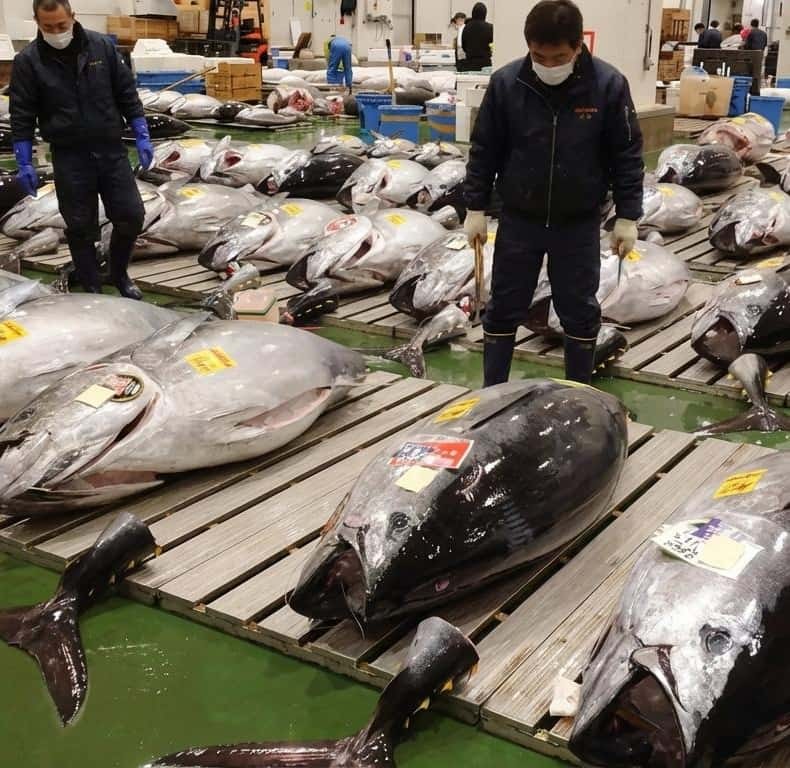
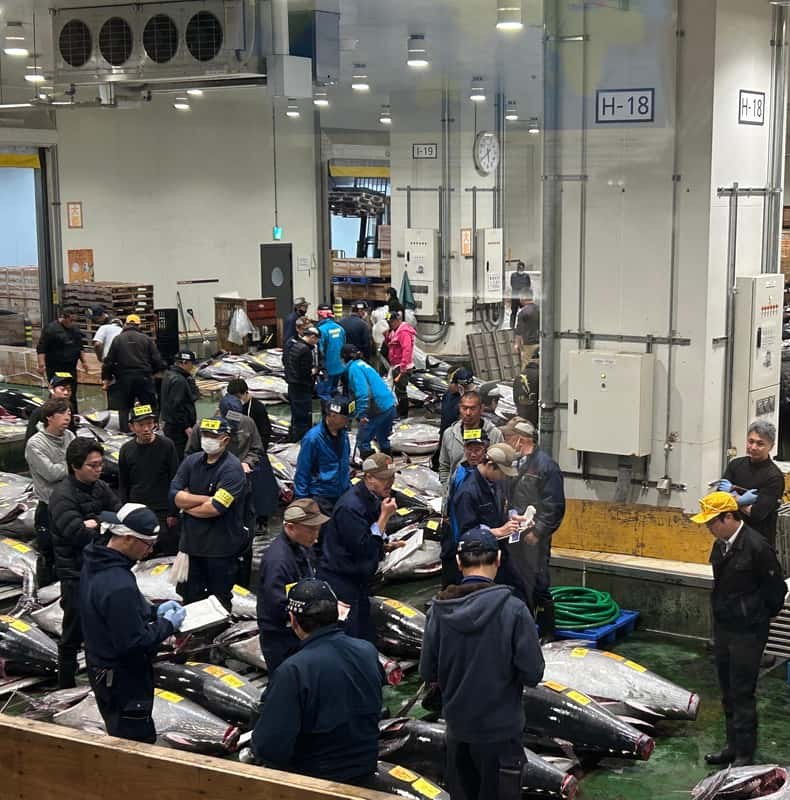
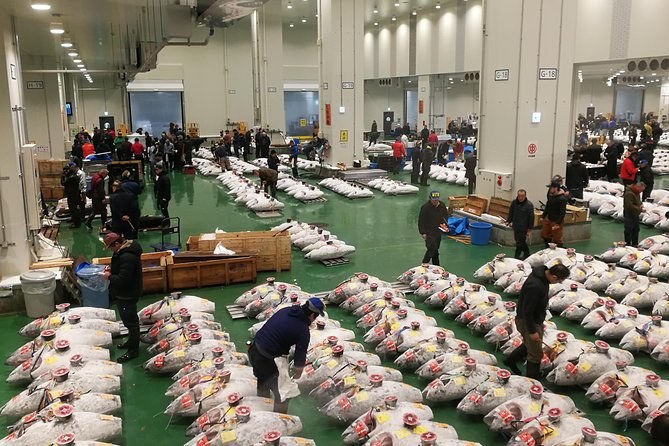
From the corridor you see the whole floor, the ranks of tuna, the buyers walking them with torches, and the auctioneer working rank by rank. You hear the calling through speakers rather than in the room. It is a good view and it is what almost every visitor gets. What happens here describes the morning in full.
How the ballot works, step by step
- Work out your date first. Check the market's calendar for closures, because the ballot only runs on trading mornings.
- Apply early in the preceding month. The window opens for about a week. October 2026's ran from the second to the eighth of September.
- Give up to three preferred dates. One application covers three, and you are allocated one of them.
- Five people maximum. One entry per group and per email address, and applying twice under a different name is not allowed.
- Wait about nine days. October's result was published on the seventeenth of September, and only winners are emailed.
- Bring photo identification. Everybody in the party shows it at 5:30 at the PR Corner in Block 7, children included.
Getting there before the trains run
Nothing runs early enough. The first Yurikamome train reaches the market well after the auction starts, so a five o'clock arrival from anywhere but Toyosu itself means a taxi. This is the part to solve before you book anything else. A taxi from Ginza or Tsukiji takes ten to fifteen minutes on empty roads; from Shinjuku or Shibuya, closer to half an hour.
Three of the guided mornings include the ride and two collect you at your hotel door. If you would rather arrange it yourself, book the car through your hotel the night before rather than trusting an app at four in the morning. Getting there has the journey times district by district.
The escalator shutters at Shijo-mae Station stay down until five, so before then take the stairs or the lift to the second-floor gate.
Which days the market is closed
Toyosu closes on Sundays, public holidays and most Wednesdays, plus a handful of irregular days the market sets a year at a time, and the irregular days are set a year at a time rather than following a rule. October 2026, for instance, is closed on the 4th, 7th, 11th, 12th, 18th, 21st, 25th and 28th. Check the calendar for your month, and where you can, keep a spare morning either side.
The rooftop garden stays open on closing days, and so does the Tsukiji Outer Market on its own calendar, so a closed day is not a wasted one. The best time to visit goes through the week and the year.
How long to allow, and what to do with the time
Two hours covers the auction and a walk through the buildings. Three gets you breakfast at one of the 38 restaurants inside the market. Four gets you the Tsukiji Outer Market as well, which is how nearly every guided morning is shaped.
What most visitors miss is everything after the bidding: the intermediate wholesale floor at its loudest, about 70 shops in Uogashi Yokocho, a produce auction in Block 5 with almost nobody watching it, and a lawn on the roof of Block 6 open 5:00 to 23:00, market holidays included.
Where to eat while you are there
Inside the market, at a counter that opened with it. The sushi restaurants take a queue by six and it does not move quickly, which is why several of these departures book a seat in advance. Bring cash for the small places.
If you have an allergy or a dietary requirement, read the allergy guide before you book: dashi puts fish in almost every soup here, and Japanese soy sauce contains wheat.
The rules inside, in one paragraph
They are short and every one of them exists because this is a place of work. No eating or drinking in the corridors, benches included. No smoking anywhere a visitor can go, because there is no visitor smoking area. No visitor parking and nowhere to leave a bicycle, so a taxi has to drop you and go. And the intermediate wholesale floor sells to supermarkets, fishmongers and restaurants rather than to you, so nothing down there is for sale.
Enter only from the pedestrian deck, where there are three visitor entrances, one per block. Keep out of the working lanes, keep children beside you on a floor with forklifts crossing it, and do not touch the fish. None of that is difficult; all of it is worth knowing before five in the morning rather than at five in the morning.
What to do afterwards
Cross to Tsukiji. It is about three kilometres west, about fifteen minutes by bus or car, and the outer market's lanes are at their best between nine and eleven once the trade has had its turn. The Tsukiji Outer Market page has its hours and its rules.
Or stay: Senkyaku Banrai next door opened on 1 February 2024 with an Edo-styled eating street and a hot spring, though its shops do not open until ten, which is after most market mornings have finished.
Ready to pick a morning? Toyosu Fish Market Tours sets every departure side by side with what its fare covers, and the FAQ page answers the rest.