A site that lists tours ought to be straight about when you do not need one, and this is one of the clearer cases in Tokyo, because the attraction itself charges nothing. Here is exactly what going alone involves, what it costs, and what you give up. Toyosu Fish Market tickets are the alternative, and this page is not trying to talk you into them.
Can you visit Toyosu Fish Market on your own?
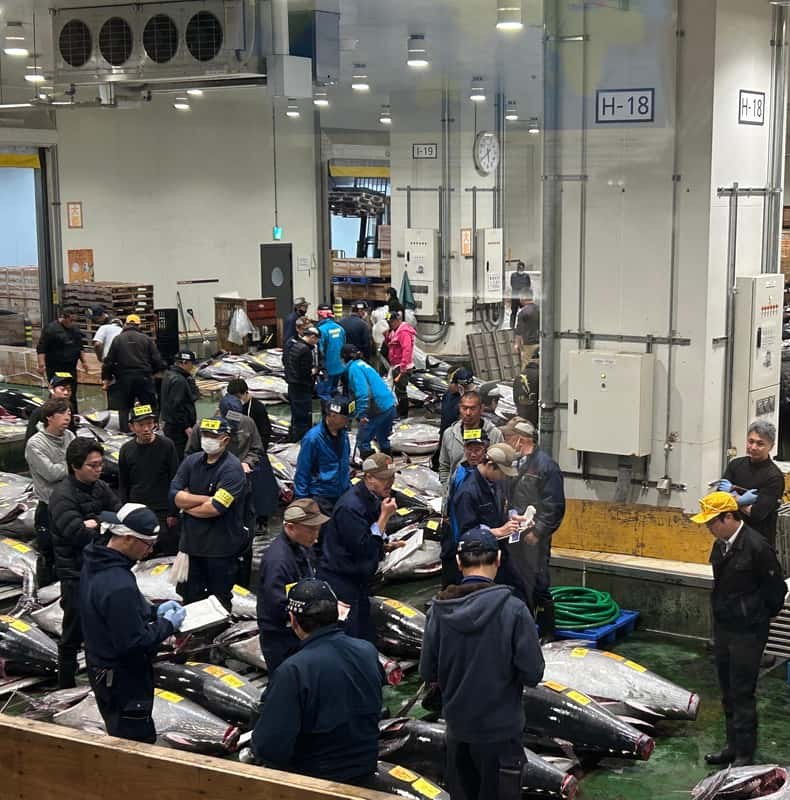
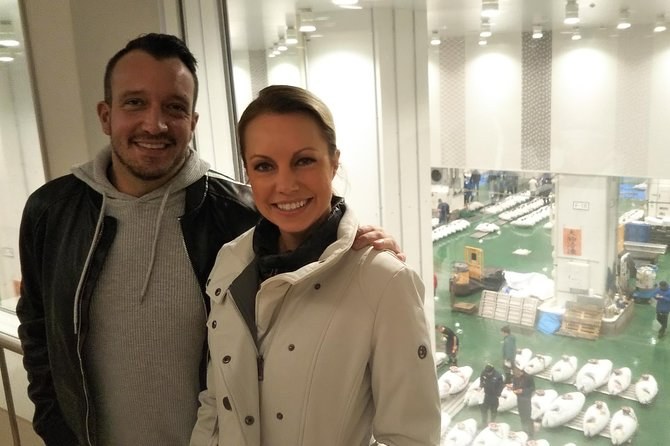
Yes, completely. There is no ticket, no timed entry, no booking and no guided-only area. You walk in from the pedestrian deck at five in the morning and watch the auction from the corridor with everybody else, and nobody checks anything.
One traveller who took a guided morning wrote it plainly in a review: it seems pretty much anyone can enter and watch, and if you know Tokyo already you could do this yourself and save a lot of money. That is a fair summary and it is on the operator's own listing.
What it costs to do it alone
| On your own | On a guided morning | |
|---|---|---|
| Entry to the market | Free | Free |
| Taxi from a central hotel | You pay it | Included on three of the fares |
| The tour fare | None | $107 to $480 a head |
| Breakfast | You pay it | You usually pay it |
| Bus to Tsukiji | You pay it | Included on several |
| The ballot | You apply | The operator applies for you |
| Commentary | None | The whole point |
So the real question is not whether you can afford to go alone. It is whether the commentary and the logistics are worth the fare to you, and for a good many travellers the answer is no.
Getting there at half past four without help
This is the hardest part and it is entirely solvable. Nothing runs early enough. The first Yurikamome train reaches the market well after the auction starts, so a five o'clock arrival from anywhere but Toyosu itself means a taxi.
Book a taxi through your hotel's front desk the night before, for a stated time. Ride-hailing apps work in Tokyo but supply at that hour is thin and you do not want to be discovering that at twenty past four. Give yourself twenty minutes of slack, because the auction does not wait.
Or remove the problem: stay in Toyosu for one night and walk. Two of these operators recommend Toyosu, Tsukiji or Ginza in their own listings for exactly this reason. Getting there has the times district by district.
Finding the right entrance on your own
Three visitor entrances, one on each block, all of them on the raised pedestrian deck. The ground floor of the management building is not one, which is the mistake that costs people the start of the bidding.
For the auction, aim for Block 7. The escalator shutters at Shijo-mae Station stay down until five, so before then take the stairs or the lift to the second-floor gate. The map page sets out which building holds what.
Entering the ballot yourself
Anybody can, from anywhere, and it costs nothing. The market runs the application on its own site, in a window that opens early in the month before your visit and closes about a week later. One application carries up to three preferred dates and a maximum of five people, and everybody shows photo identification on the morning.
An operator cannot improve your odds. What they can do is remember to apply, which is the part travellers planning a fortnight ahead usually miss. Visitor information has the full sequence with the dates.
Where to eat without a reservation
Anywhere except the two or three best-known sushi counters, which have a queue by six that does not move quickly. The market holds 38 restaurants across three buildings, and the ones without a famous name are frequently as good and immediately available.
Bring cash. Some counters take cards and the small places often do not, and at seven in the morning you do not want to be finding a machine.
What you give up by going alone
- The translation. Nothing on that floor is labelled in English and the hand signals mean nothing without somebody to read them.
- Context. Why one rank sells for four times another, what the tail cut is for, which fish are farmed. None of it is signed.
- The reserved seat. One departure holds a place at a sushi counter with no queue, for any size of party.
- The car. Three fares include it and two collect you at the door.
- The ballot admin. Somebody who will not forget the window.
The one thing you should not try alone
Buying on the intermediate wholesale floor. It sells to supermarkets, fishmongers and restaurants in quantities no household needs, and general shoppers cannot buy there at all. Wandering into a working lane to ask is the one behaviour the market's own notes ask visitors to avoid.
Shop upstairs instead, in Uogashi Yokocho, where about 70 shops sell to anybody, or at Tsukiji, where every stall does.
What you gain
Time, and about a hundred to five hundred dollars a head. You can stay at the glass as long as you like, skip the parts that bore you, eat where you want and leave when you are ready. Nobody is waiting for you at the top of a staircase.
You also get the produce auction in Block 5 and the rooftop garden, which no guided morning here includes and which are two of the better things in the complex.
What going alone actually looks like, step by step
- Check the market's calendar for the morning you want, because it closes on Sundays, public holidays and most Wednesdays, plus a handful of irregular days the market sets a year at a time.
- Apply for the ballot in the first week of the preceding month if you want the lower deck. It is free and it takes ten minutes.
- Book a taxi at the front desk the night before, for half past four.
- Go in from the pedestrian deck at Block 7 at five, and walk straight to the glass.
- Stay for the bidding, then follow the signs to Block 6 for the wholesale floor at half past six.
- Eat at any counter without a famous name, with cash, at seven.
- Go up to the roof or across to Block 5, then take the Yurikamome or a bus onward.
That is the whole thing, and none of it needs a booking. The map page puts the entrances and the buildings in place, and visitor information has the hours for each area.
Who should go alone, and who should not
Go alone if you have been to Tokyo before, you are staying near the bay, you are comfortable booking a taxi in a language you do not speak, and you are more interested in the spectacle than the explanation.
Take a guide if it is your first morning in Japan, you are travelling with children or a party, you want the bidding explained as it happens, or you would simply rather somebody else got you out of bed and into a car at half past four.
Is a guide worth it at Tsukiji?
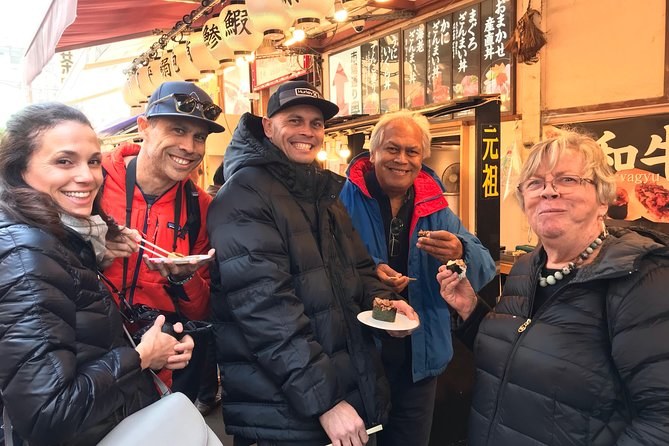
Less so, and for a different reason. The Tsukiji Outer Market is a retail street: the shops want your custom, several people speak some English, and wandering it is the whole pleasure. What a guide buys there is stall selection and the confidence to order.
One reviewer on a guided food morning says exactly that: the value of a guide is picking the right booths and taking you into the non-tourist sections. That is real, and it is a smaller gap than the one at the auction. The Tsukiji page covers the district's own rules for visitors.
Frequently asked questions
Do I need to book anything at all?
Will anybody stop me at the door?
How much Japanese do I need?
Is it safe at that hour?
What if I would rather have a guide only for Tsukiji?
Can I take a taxi back afterwards?
Decided you would rather have it handled? Toyosu Fish Market Tours sets every departure beside what its fare covers, and the price guide does the arithmetic.