This is the decision that stalls a Toyosu plan, and most pages answer it by describing both platforms rather than resolving them. Here is what each one gives you, what the ballot actually involves, and the honest answer about whether either is worth a half-past-four alarm. Toyosu Fish Market guided tours are built around the same two options.
Do you need a ticket to watch the tuna auction?
No, and there is no ticket to need. Entry to Toyosu Market is free, published in one word by the Tokyo Convention and Visitors Bureau, and that covers the visitor corridors, the auction viewing corridor, the viewing gallery and the rooftop garden alike.
There is no ticket office at the market, no timed entry and no online booking. You walk in from the pedestrian deck at five in the morning and nobody stops you. That is unusual enough that most first-time visitors do not believe it, and it is the single most useful thing to know before you plan anything else.
The visitor corridor: what you get for nothing
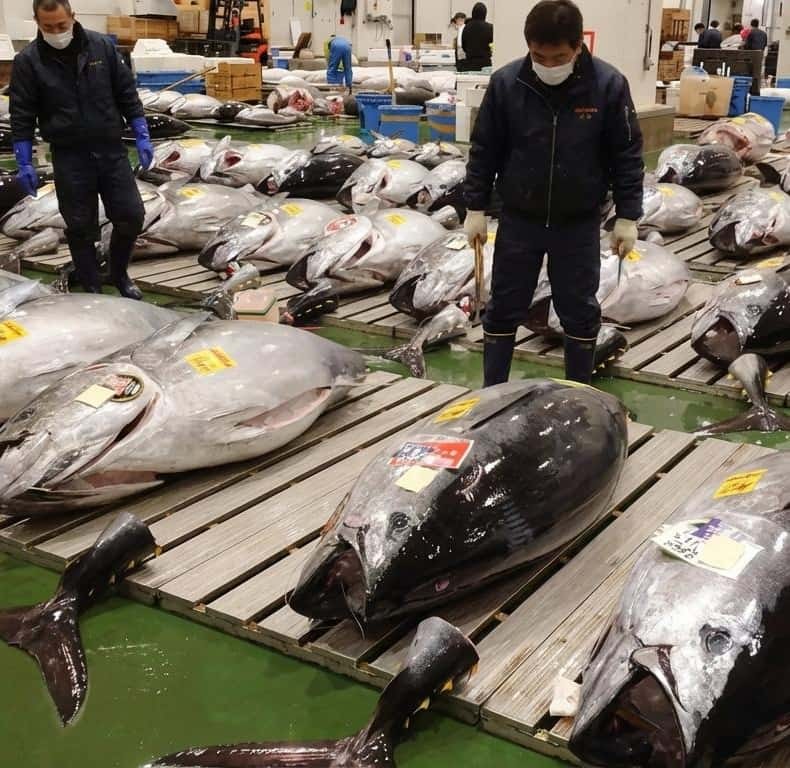
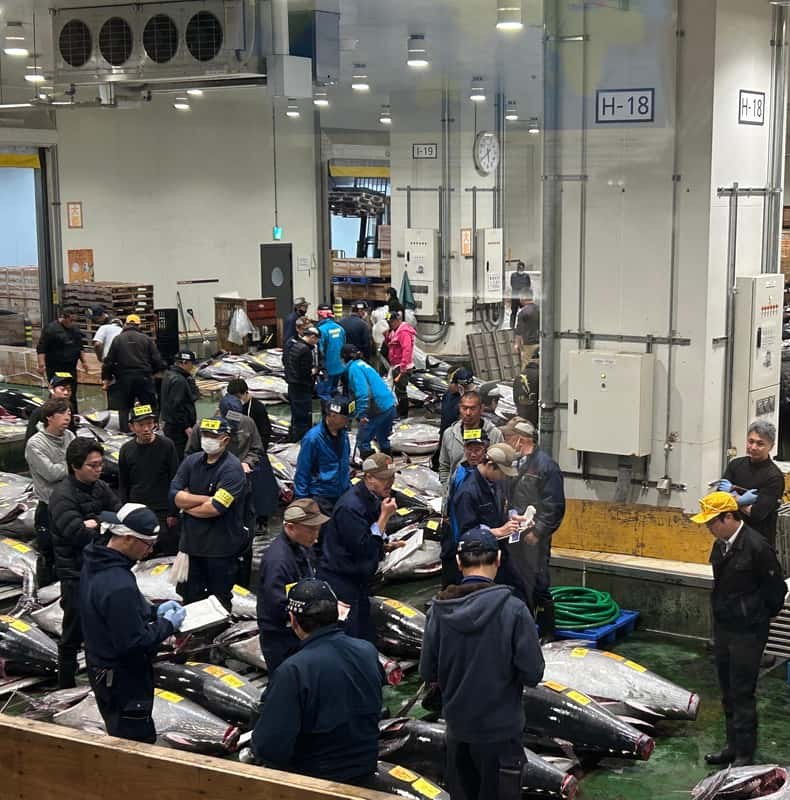
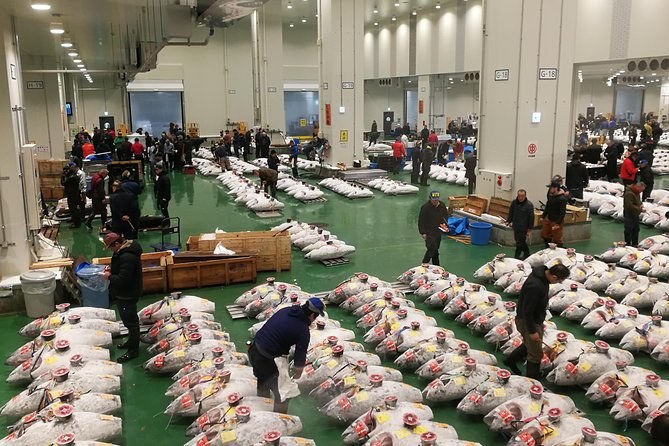
A glazed walkway runs above the auction hall. It opens at 5:00, needs no booking, has no limit on numbers and takes anybody who turns up. You look down on the whole floor: the ranks of frozen bluefin laid out with a paper tag on every tail, the buyers walking between them with torches and hooks, and the auctioneer working rank by rank once the bell goes.
The glass is sealed, so the calling comes through speakers rather than through the air. One traveller puts it exactly: you cannot go down onto the floor, you watch from above behind glass, and you hear everything through the loudspeakers. It is a clear view and it is what almost every visitor gets.
What decides how good your morning is, then, is not luck. It is what time you arrive. The places looking straight down the ranks rather than across them go within about twenty minutes of the doors opening.
The observation deck: what the ballot gets you
Lower, closer, and rationed. The market runs a ballot for a limited number of places on a deck nearer the fish, and winning it changes what the morning feels like rather than what you see. You are at the hall's own level, close enough to hear the room instead of a speaker.
The market does not publish how many places the deck holds. Guides elsewhere quote anything between 27 and 120 a day, so no number appears here. What is published is the process, and the process is what matters when you are planning.
Corridor or deck, side by side
| The visitor corridor | The observation deck | |
|---|---|---|
| Booking | None — walk in | Ballot, about a month ahead |
| Cost | Free | Free |
| Opens | 5:00 | Meet 5:30 at the PR Corner, Block 7 |
| Where you stand | Above the hall, behind sealed glass | Lower, and closer to the fish |
| Sound | Through speakers | The room itself |
| Party size | No limit | Five people to an application |
| Identification | None | Photo ID for everyone, children included |
| If you arrive late | The good places are taken | You lose your place |
| Available in late December | Yes | No — the ballot pauses |
How do you enter the ballot?
Through the market's own application site, and only inside a window that opens early in the month before your visit. The steps are fixed and the deadlines are real.
- Who runs it. The Tokyo Metropolitan Central Wholesale Market, through its own application site
- When to apply. A window of about a week early in the preceding month. October 2026 opened on 2 September and closed on the 8th
- When you hear. About nine days after the window shuts. October's result was published on 17 September, and only winners are emailed
- Dates. One application carries up to three preferred dates and you are given one of them
- Party size. Five people maximum, and one application per group and per email address
- On the day. Be at the PR Corner in Block 7 at 5:30. Everyone shows photo identification, and a child without any shows a health insurance card
Two things trip people up. The window shuts about a week after it opens, so a tour booked a fortnight before your trip has already missed it. And one application per group means you cannot improve your odds by having everybody apply separately.
What happens if you lose it?
You watch from the corridor with everybody else who did not enter, and you see the same auction. Every guided morning here is built on that basis; the deck is treated as a bonus rather than as the plan. Nobody who misses the ballot misses the bidding.
It is worth saying because the ballot generates a great deal of anxiety in trip planning, and it does not deserve it. The corridor is a good place to stand. The deck is a better one.
What time do you actually have to be there?
Inside the building by five, not at the station at five. The bidding runs roughly 5:30 to 6:30, and it does not wait. Arriving at half past five means it has started and the best places have gone; arriving at six means catching the end of it.
That single number decides your transport, because nothing runs early enough. the first yurikamome train reaches the market well after the auction starts, so a five o'clock arrival from anywhere but toyosu itself means a taxi. Getting there sets out the taxi times district by district. The escalator shutters at Shijo-mae Station stay down until five, so before then take the stairs or the lift to the second-floor gate.
What you are watching, once the bell goes
A working sale, not a display. The fish are laid out in ranks with the head to one side and a numbered lot tag on each tail. A slice has been cut from every tail so a buyer can read the fat in the flesh with a torch, and that cut, the shape of the body and where the fish was landed decide the price.
The buyers answer the auctioneer with hand signals rather than voices, and those signals are older than the auction itself. Before the market moved to open bidding in the 1930s, fish at Nihonbashi changed hands in secret, with fingers worked inside a sleeve. The history page covers how that changed.
The most reported sale of the year is the first auction after the New Year closure. In January 2026 the top fish, a 234-kilogram Pacific bluefin landed at Oma in Aomori, sold for ¥510.3 million, about ¥2.1 million a kilogram.
Can an operator improve your odds?
No, and any that suggests otherwise is overpromising. The market allocates the places at random and does not sell them, so what a good operator does is register your names inside the window and tell you the result. Several of these listings say exactly that.
What an operator can genuinely change is everything else: the taxi at half past four, a running translation of the signals, a held seat at a sushi counter, and a route through three buildings you have never seen.
Who should skip the auction altogether
Anyone who cannot face the hour, and there is no shame in it. The bidding is over before seven and the corridor is the only way to see it, so a morning that starts at eight has missed the whole thing.
If that is you, the market is still worth a visit: the restaurants, Uogashi Yokocho and the rooftop garden all run to a civilised timetable, and the Tsukiji Outer Market is better after nine than before it. One of the departures here skips the auction entirely and spends the morning eating instead. The food tours page compares them.
Frequently asked questions
Is the tuna auction really free to watch?
Can I just turn up?
How close do you get?
Do I need a guide to understand it?
Can children watch?
Is there an auction every day?
Ready to pick a morning? Toyosu Fish Market Tours sets every departure beside its start time and what its fare covers, and visitor information has the hours and the calendar.