Most attractions have a season. A wholesale market does not, because Tokyo eats fish in February as readily as in August. That makes the seasonal question here narrower and more practical than usual, and this page answers the version of it that actually matters. Toyosu Fish Market guided tours run to the same calendar.
Does the season change the auction?
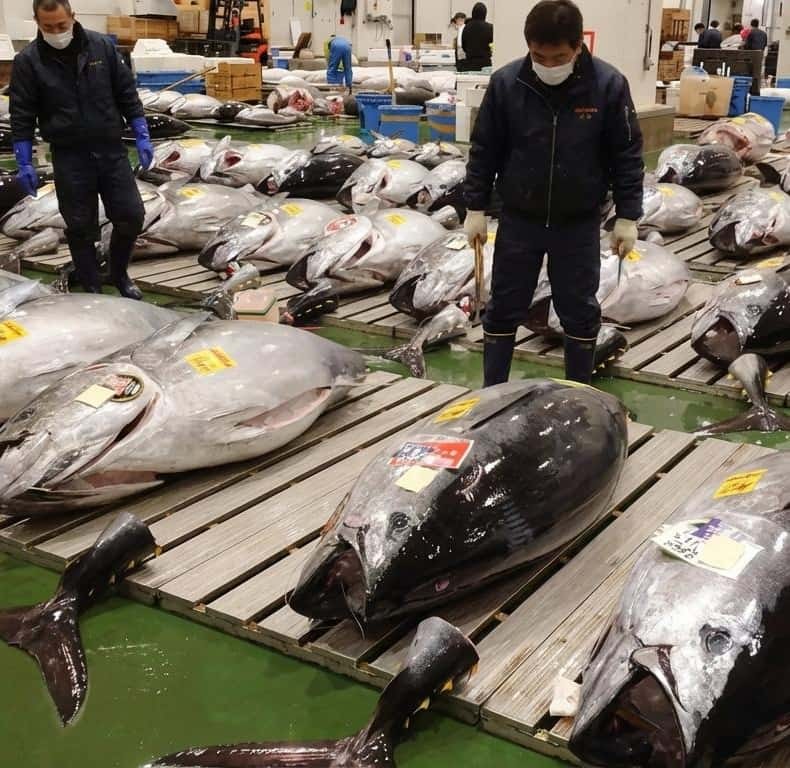
No. The bidding runs on every trading morning of the year, it does not pause for weather and it does not shrink in the low season. One of the captured listings says so directly: you can watch the year-round tuna auction in any season.
What changes is what is on the floor beside the frozen bluefin. Fresh fish turn over with what the boats are landing, and the produce hall in Block 5 changes far more visibly than the fish hall does.
The market's calendar, and why it is not a rule
Toyosu closes on Sundays, public holidays and most Wednesdays, plus a handful of irregular days the market sets a year at a time. That is more closure than most visitors plan for, and the extra days are set a year at a time rather than following a pattern you can work out in your head. October 2026, for instance, is closed on the 4th, 7th, 11th, 12th, 18th, 21st, 25th and 28th, which is eight closed days in a single month.
| Day | Trading? | What it means for a visit |
|---|---|---|
| Monday | Usually | A full auction, and the quietest trading day for visitors |
| Tuesday | Usually | A full auction |
| Wednesday | Often closed | The most common midweek closure |
| Thursday | Usually | A full auction |
| Friday | Usually | Busy, as restaurants stock for the weekend |
| Saturday | Usually | Trades, and the busiest day for visitors |
| Sunday | Closed | Only the rooftop garden is open |
| Public holidays | Closed | Including the New Year period |
Check the market's own calendar for the month you are travelling, and keep a spare morning either side if you can. The best time to visit covers the week in more detail.
Winter mornings, December to February
Tokyo is close to freezing at five in the morning and dark until well after the bidding ends. The auction hall is refrigerated anyway, so the layers you want inside are the same all year; what changes is the walk between the buildings and the wait for a taxi.
The compensation is that winter is the season for the fish this market is famous for, and the New Year sale falls in it. Dress as you would for a cold morning outdoors, not for a museum.
Spring, March to May
The easiest months to do this. Mild at five, light by six, and Tokyo at its most crowded everywhere except here, because the cherry blossom crowds are in the parks rather than in Koto City at dawn.
The one thing peak season does change is taxis: they are harder to find at four in the morning in the busiest weeks, so book the car the night before rather than trusting an app.
Summer, June to September
Warm and humid by five, light not long after, and the auction hall is a genuine relief. This is the season when the rooftop garden earns its ten minutes, because you finish breakfast in full sun with the bay in front of you.
The walk between buildings is the only uncomfortable part, and it is short. Carry water; there is no eating or drinking in the corridors, benches included.
Autumn, October and November
Arguably the best of the four. Cool rather than cold, light by six, and the produce hall in Block 5 at its most interesting as the autumn crops come through. The market is also past the summer holiday period, so the corridor is a little less crowded.
If you have a free choice of month and no particular reason to pick one, pick these two.
New Year, and the first auction of the year
The market closes for several days at the turn of the year and reopens with the first sale of the new one, which is the most reported auction in its calendar. In 2026 the top fish, a 234-kilogram Pacific bluefin landed at Oma in Aomori, sold for ¥510.3 million, about ¥2.1 million a kilogram, and the highest price ever paid at that sale. The previous record, ¥333.6 million in 2019, went to the same buyer.
You cannot easily plan around watching it. The market is shut on either side, the corridor is at its most crowded, and the ballot is paused. What you can do is understand what you are looking at in any other week.
December, and the two things that change
There is no ballot at the end of December. In that week everybody watches from the corridor. If the closer deck is the reason you were coming, December is the month to avoid.
The second change is at the other end of the morning. The Tsukiji Outer Market asks visitors to hold back on sightseeing and group tours through December so that New Year shopping can run safely, and that request is published on its own site. Come in the morning, come in small numbers and buy something. The Tsukiji page has the district's own rules.
Golden Week and the summer holidays
The two periods when Tokyo is at its busiest are late April into early May, and the middle of August. Neither changes the auction, and both change everything around it: hotels are dearer, taxis are harder to find before dawn, and the corridor is fuller with domestic visitors than at any other time.
Public holidays inside those weeks are closing days at the market, which is the part that catches people out. A Golden Week morning can easily land on a day the market is shut, so check the calendar before you fix the dates rather than after.
Rain, typhoons and what actually closes the market
Weather does not. The auction hall, the corridors and the wholesale floors are all indoors, the market's hours do not shift with the season, and there is no weather condition that stops the trade. What weather changes is the short walk between the blocks and the ease of finding a taxi.
Individual tours are a different matter: several of these listings reserve the right to cancel for severe weather, and every one of them refunds in full at twenty-four hours' notice. Typhoon season runs through late summer and early autumn, and a warning day is one to watch rather than to fear.
Which month is best for the ballot?
Any of them except late December, when it pauses. What matters far more than the month is the timing of your application: the window opens early in the preceding month and closes about a week later, which is long before most people book a tour.
So if the deck matters to you, choose your dates two months ahead rather than picking a favourable-sounding month. Visitor information has the sequence with the dates.
Daylight, month by month
Tokyo's sunrise moves by about two hours across the year, from just after half past six in late December to a little before half past four in June. That single fact reshapes the walk in and the walk out more than temperature does.
In midsummer the bidding starts in daylight and you finish breakfast in full sun. In midwinter the whole morning happens in the dark and the sky only lightens as you leave, which is when the rooftop garden earns its ten minutes.
What to wear, whatever the month
- Layers. The auction hall is refrigerated in August as well as in January.
- Closed shoes you do not mind getting wet. The floors are hosed down, every day of the year.
- A jacket in winter. The walk between blocks is outdoors and Tokyo at five in January is cold.
- Nothing you mind smelling of fish. A working market smells like one, which is part of it.
- Nothing bulky. The corridors are narrow and there is nowhere to leave a bag.
Frequently asked questions
Is there a low season for the tuna auction?
Is Saturday worth avoiding?
Does cherry blossom season change anything at the market?
When is the New Year auction?
What is the best month overall?
Will the weather ever close it?
Picked a month? Toyosu Fish Market Tours lists every departure with its start time, and the best time to visit narrows it to a day.